High-pressure pump
| Function | |
|
The high-pressure pump generates a constant system pressure for the fuel rail, independent of the fuel injection. Unlike conventional fuel-injection systems, the fuel is not compressed during the injection process. The pump is located at the same position as a conventional injection pump. It is driven via a coupling, chain, gearwheel, or toothed belt. The pump speed is proportional to the engine speed. When the engine is idling or running on partial load, the high-pressure pump generates excess fuel. On first-generation systems this is returned to the fuel tank by a pressure-control valve on the fuel rail. Not using part of the compressed fuel makes the overall efficiency drop. Therefore the second-generation systems have a facility for controlling the fuel delivery at the high-pressure pump side. A metering unit (variable solenoid valve) adapts the fuel quantity to system demand. Besides placing a lower performance demand on the high-pressure pump, this also results in a reduction in the maximum fuel temperature. |
|
| Operation | |
|
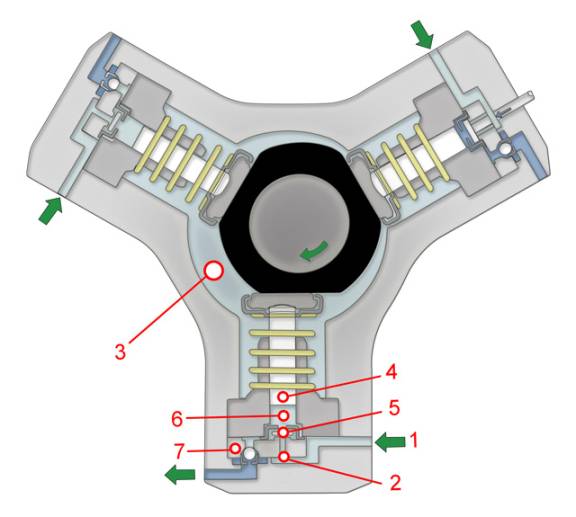
Inside the pump the plungers compress the fuel. At three delivery strokes per revolution the radial-piston pump produces overlapping delivery strokes, even load on the pump drive, and low drive peak. The radial-piston pump in passenger cars is lubricated by fuel. Commercial vehicles can also have oil-lubricated pumps. These are mainly in-line piston pumps. Figure 5: Radial-piston pump
The low-pressure pump delivers the fuel via a filter to the high-pressure pump inlet (1). Behind the inlet is a safety valve (2). When the delivery pressure from the low-pressure pump exceeds the opening pressure of the safety valve, the fuel flows into the lubrication circuit (3) of the high-pressure pump. The eccentric on the drive shaft moves the pump plunger up and down. The fuel flows through the inlet valve (5) into the element chamber (6). Now the pump plunger moves downwards. When the bottom-dead centre position of the plunger is exceeded, the inlet valve closes. The pressure will rise above the delivery pressure of the low-pressure pump. The rising pressure opens the outlet valve (7) when the fuel rail pressure is reached. The pressurized fuel then flows to the high-pressure circuit. This continues until the top-dead centre position is reached. Then the pressure will drop and the outlet valve closes. The remaining fuel is depressurized and the plunger moves downwards. The inlet valve reopens when the pressure in the element chamber exceeds the delivery pressure and the process starts over. |
|