Injector
| Purpose | |
|
The fuel is delivered to the injectors via the high-pressure lines. The injectors are sealed to the combustion chamber by copper gaskets and fitted into the cylinder head with taper locks. In contrast to conventional systems, the nozzle is incorporated in the injector. Therefore a there is no need for a nozzle holder. There are three injector types:
|
|
| Operation | |
|
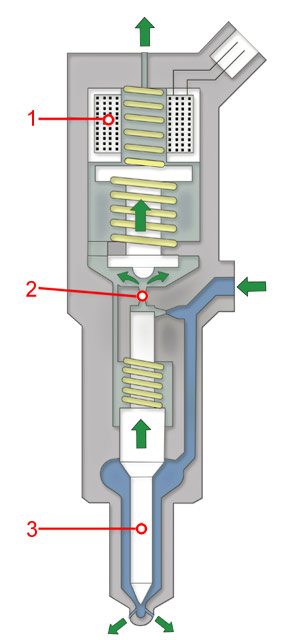
The fuel injector is an electronically-controlled valve, which is controlled by the engine control unit. By collecting information from various sensors around the engine, the engine control unit determines the precise amount of fuel required and when it is needed. It then sends a signal of the correct duration and timing to the injector. The signal opens the injector and allows fuel to pass through it into the engine. Figure 8: Solenoid-valve injector
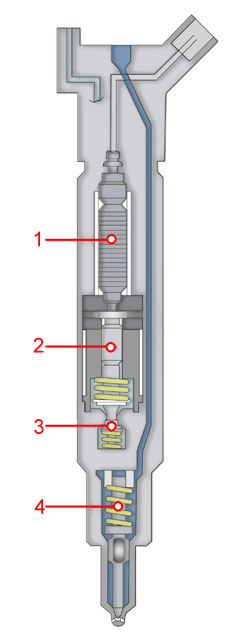
Figure 9: Piezo injector
The piezo injector's design reduced the number of moving parts and internal friction. This dynamic design makes it possible to have high needle speeds together with precise and extremely small injected fuel quantities. As a result the hydraulic efficiency is much higher than in conventional systems. |
|